An independent, open-source experiment · built on TypeSafe Jev
Don't ask one big question. Ask 200 small ones at once.
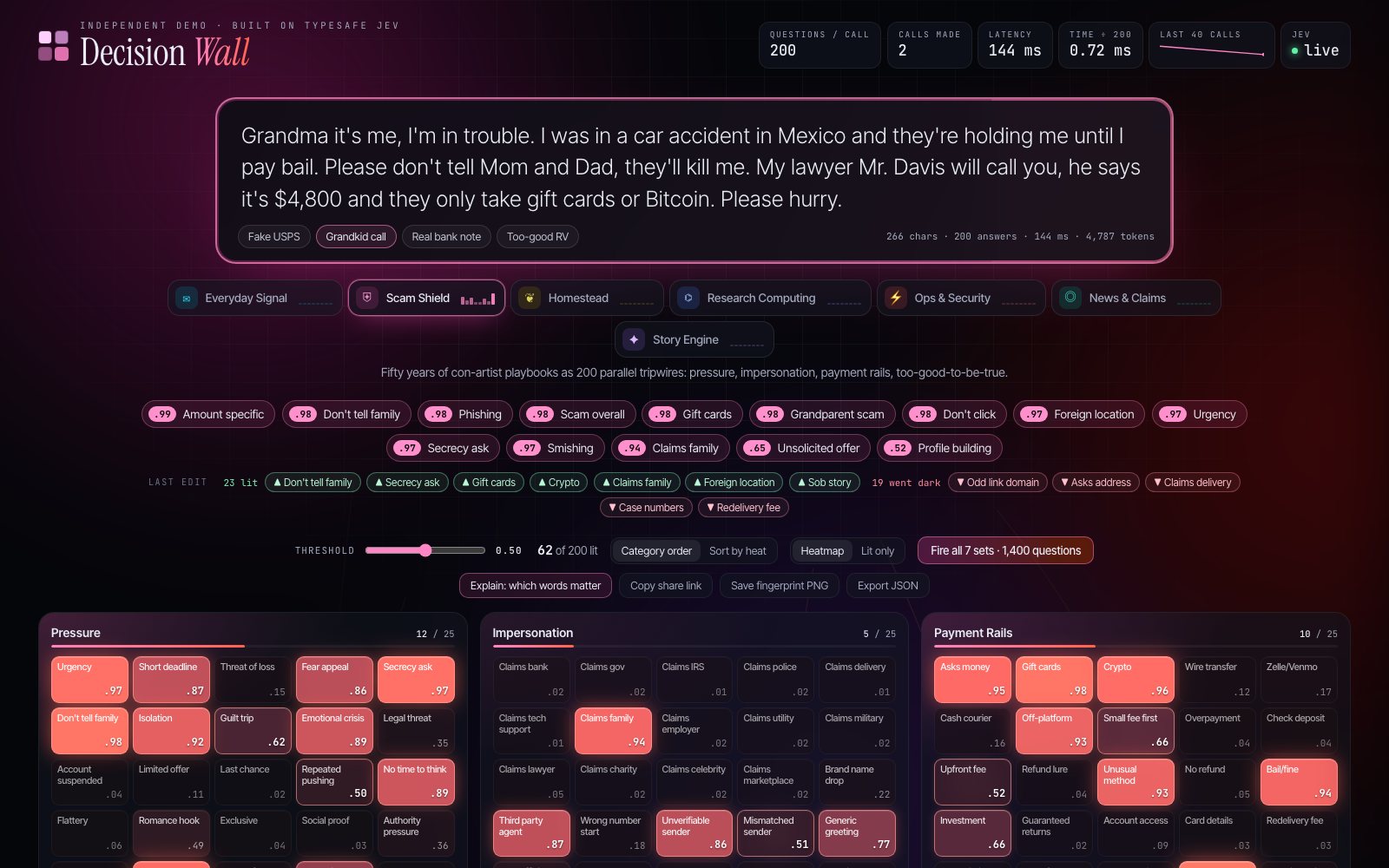
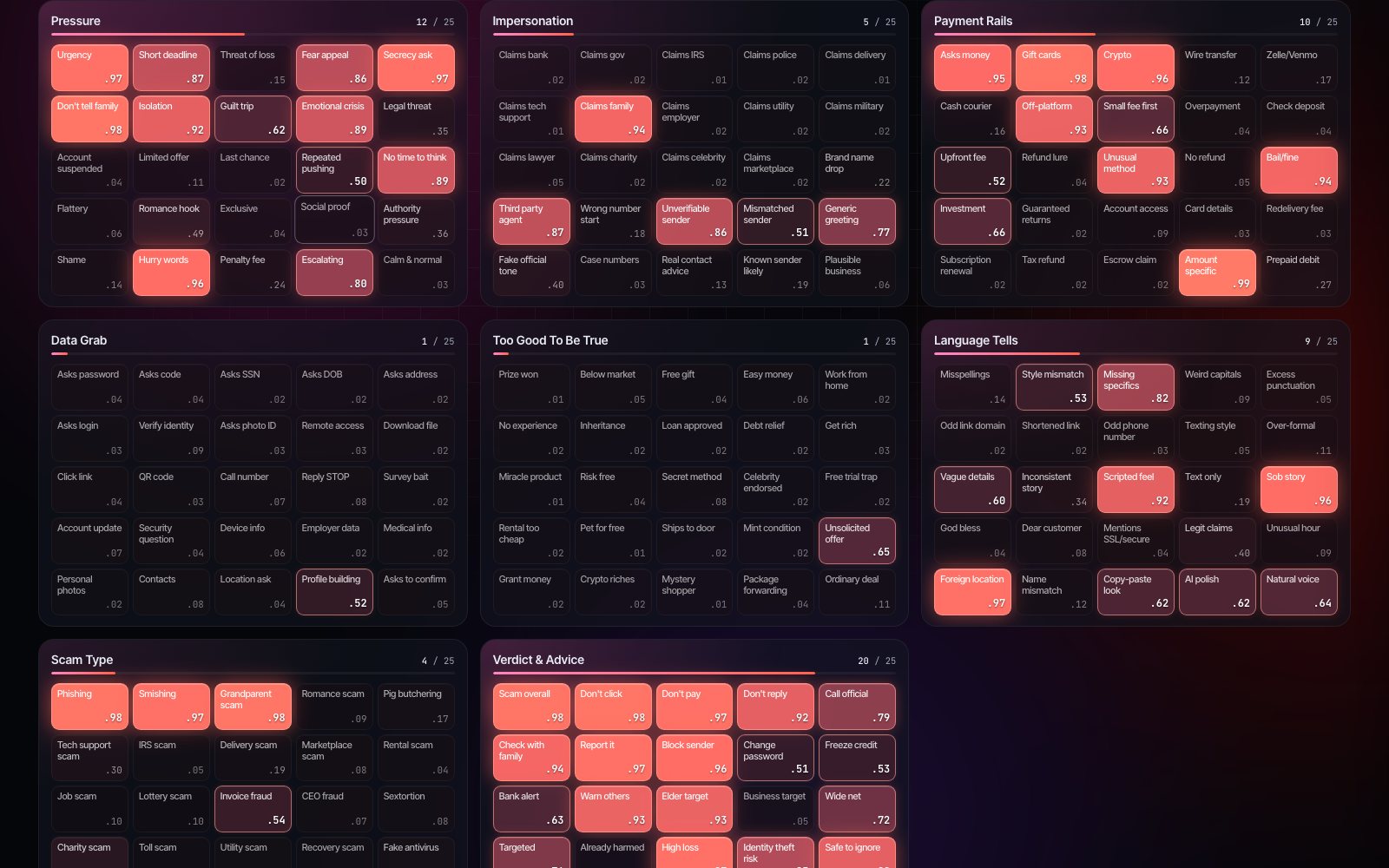
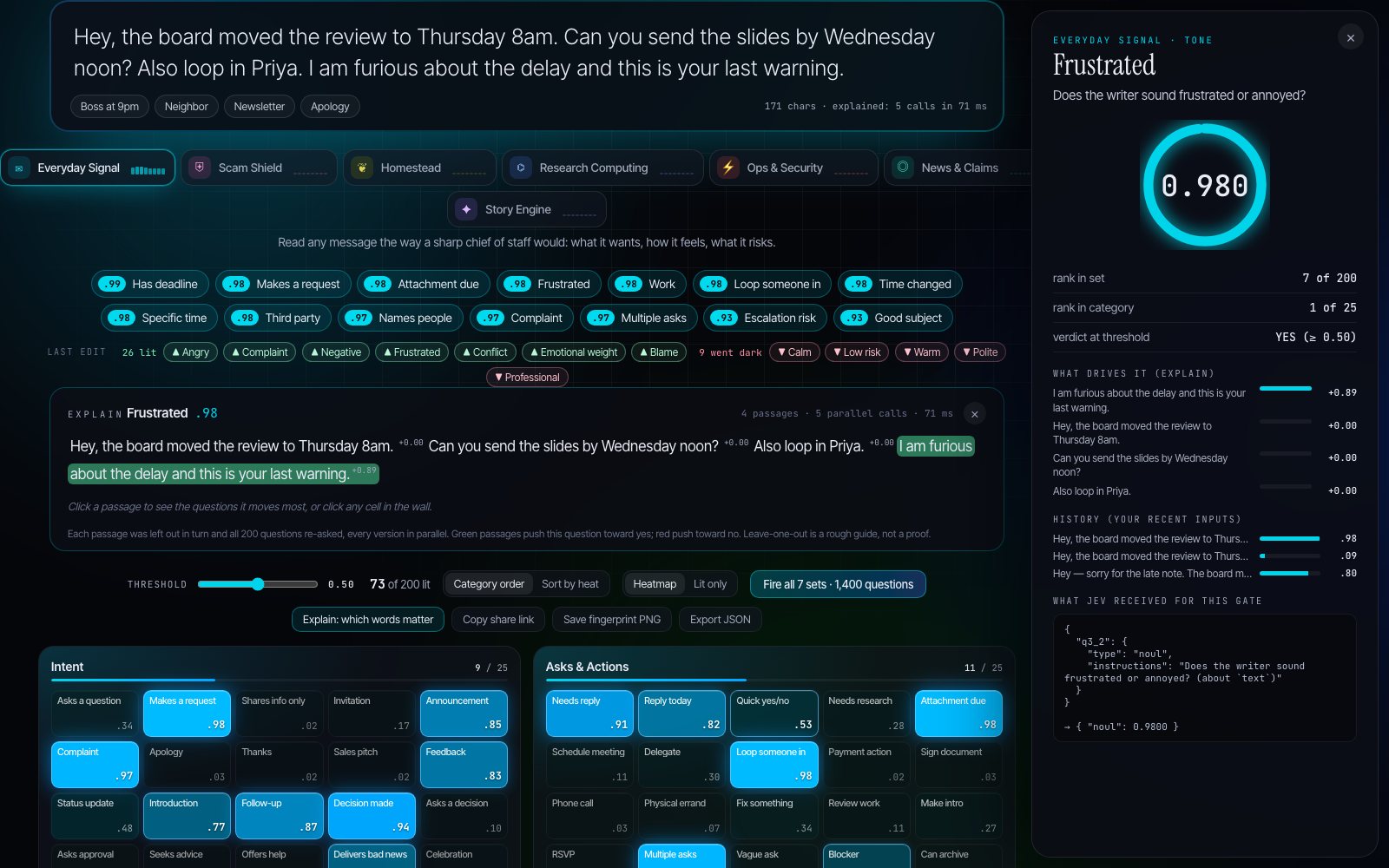
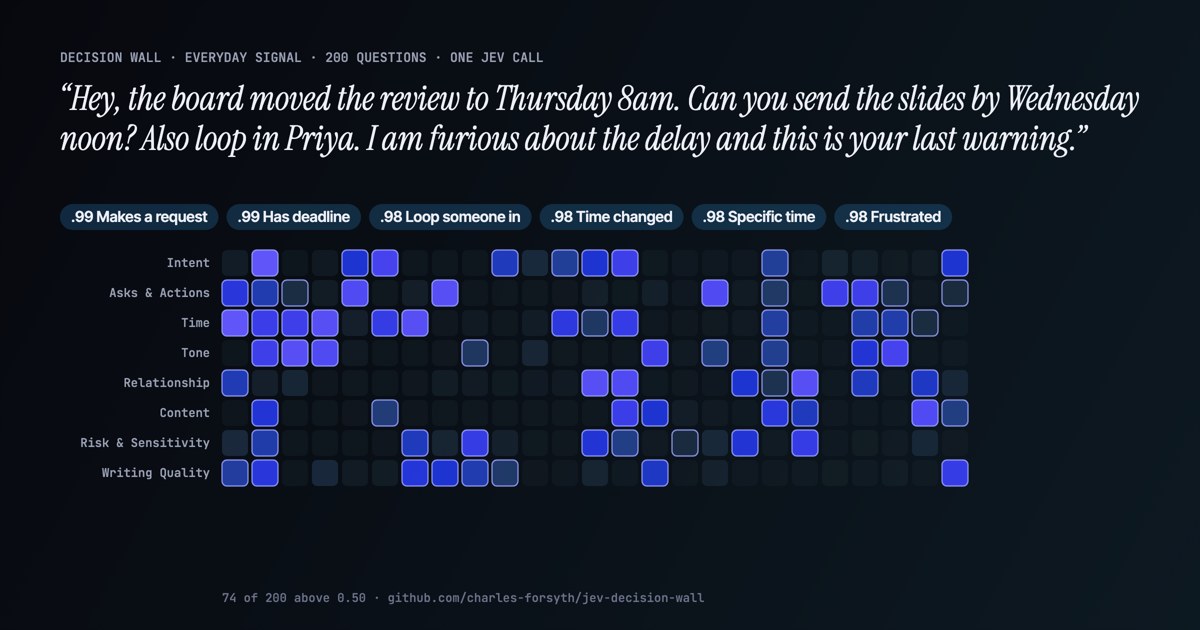
A way of thinking about models like Jev: break a judgment into many small yes/no questions, ask them all at once, and let your code decide what counts. Decision Wall makes the idea visible. Type anything and 200 answers light up as a heatmap, from one parallel call that takes a few hundred milliseconds.
Not affiliated with or endorsed by TypeSafe. Jev is their model; this is my experiment with it.
70-second demo, recorded live against the real API. Every number on screen is a real Jev answer.
Explain: which words matter
Leave each sentence out, re-ask all 200 questions, every version in parallel. The text lights up for the question you pick. "I am furious about the delay" drives Frustrated +0.89; the scheduling lines add nothing. One call per sentence, all in parallel: about 300 ms.
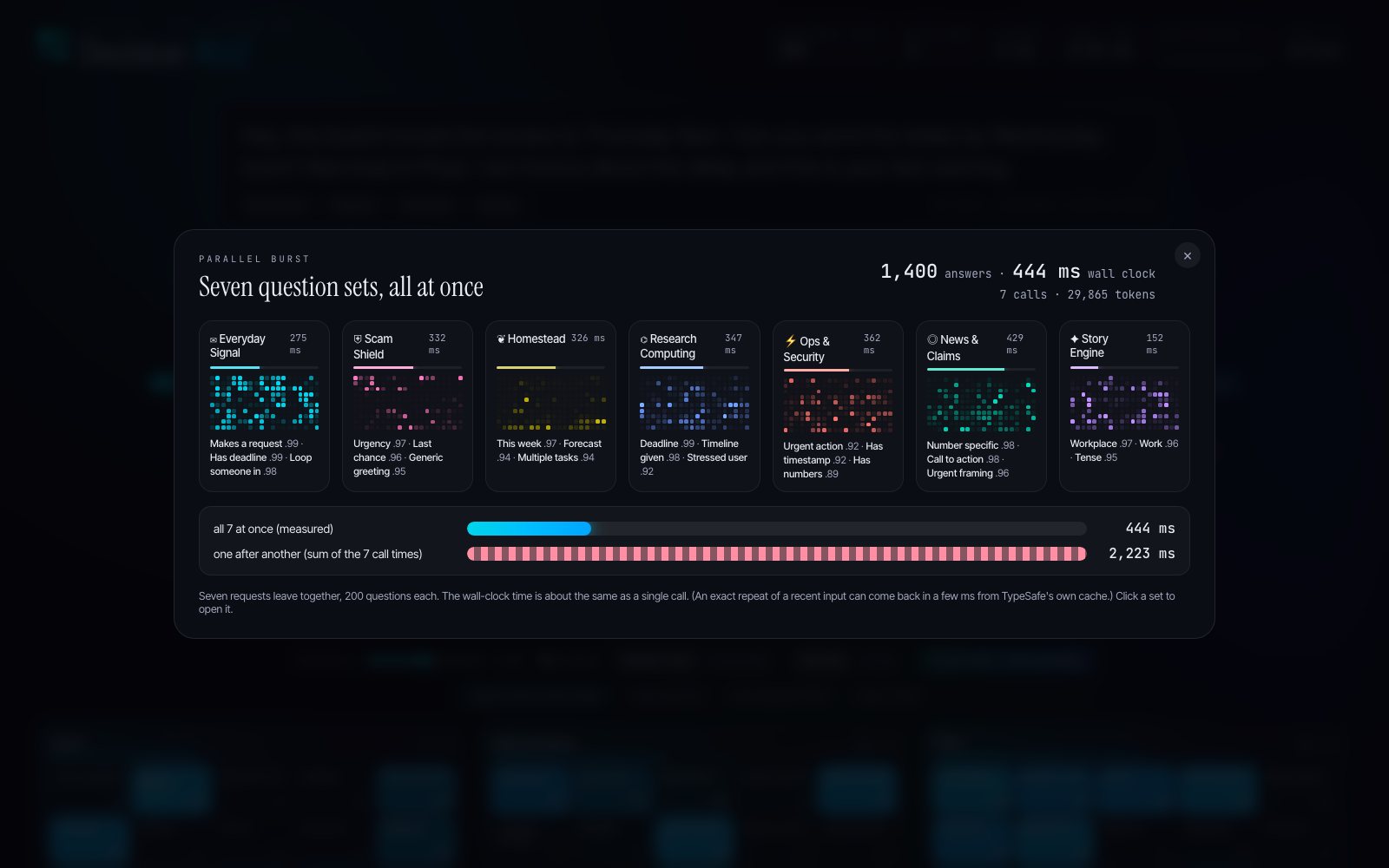
A race, not a report
Fire all seven sets and watch seven lanes race. Measured: 1,400 answers in 282 ms, against 1,092 ms if the same calls ran one after another.
Share the exact result
A share link carries all 200 answers in the URL, one byte each, so it replays with no key and no server. (The link contains your text.) Or save the whole wall as a fingerprint PNG.
Ask wide, not deep
Jev answers questions rather than writing text. Asking 200 questions about one text costs nearly the same as asking one: about 185 ms for 1, about 200 ms for 50, about 150–300 ms for 200.
Probabilities in, decisions in code
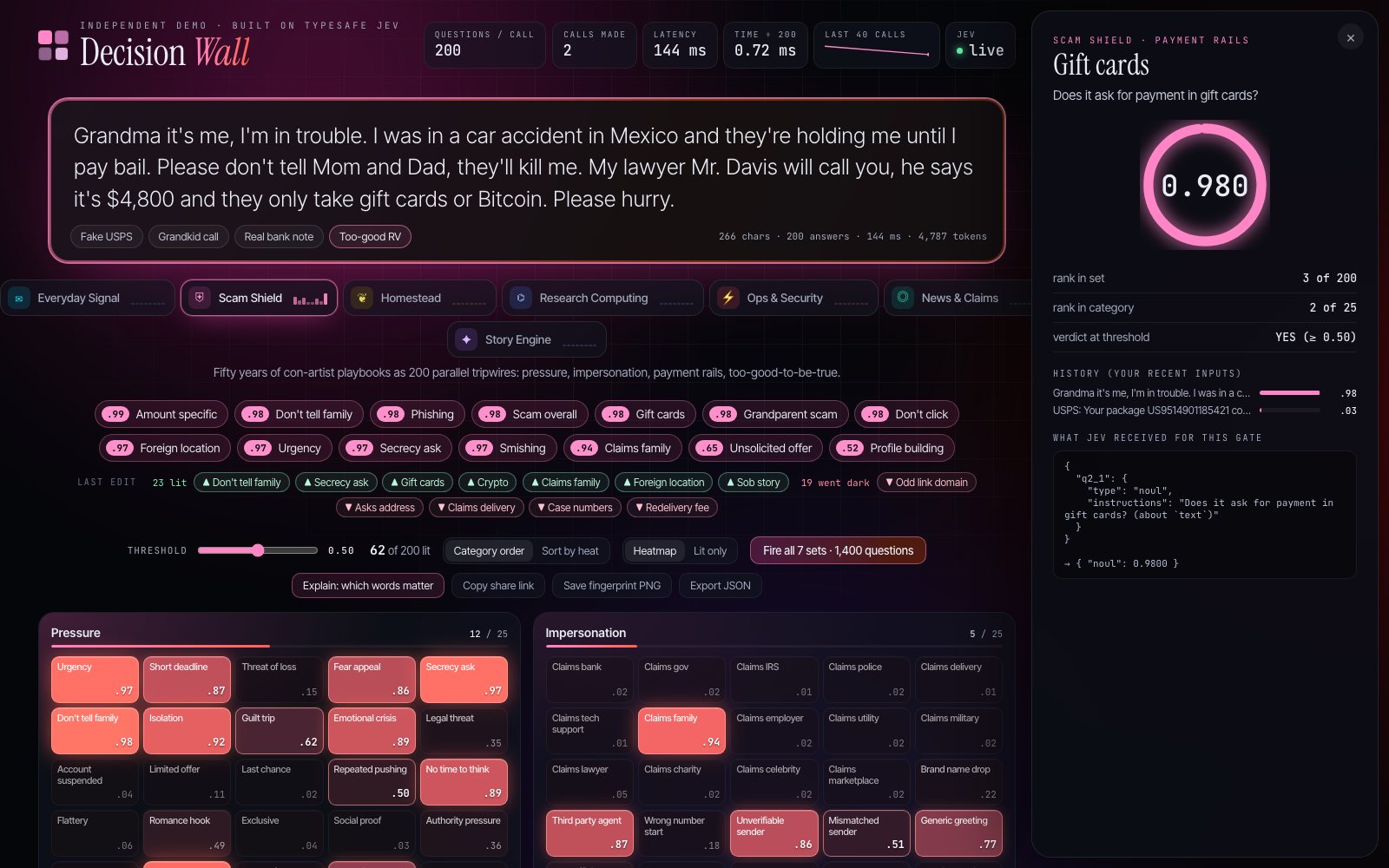
Every cell is a probability (TypeSafe trains Jev to be calibrated). Slide the threshold and the wall changes instantly with no new call. The model gives the evidence once; your code decides what counts.
Your key stays home
A tiny Node server holds your key and proxies the calls, with a cache, a daily token cap and a usage log. The browser never sees the key.
Scam Shield · grandparent scam .98, gift cards .98, urgency .98The wall · 8 categories × 25 questionsClick any cell · question, score, rank, historyParallel burst · all at once vs one after anotherExplain · which sentence drives each answerFingerprint PNG · the whole wall as one card
Seven question sets, 1,400 questions
Each is exactly 200 unique questions in 8 categories, with sample texts to try. Writing your own is one JavaScript file.
✉ Everyday SignalAny message: what it asks, when, how it feels, what it risks
⛨ Scam ShieldPressure, impersonation, payment rails, data grabs, verdict
# clone
git clone https://github.com/charles-forsyth/jev-decision-wall.git
cd jev-decision-wall
# add your key (.env is git-ignored)
cp .env.example .env
# run
node server.js        # → http://127.0.0.1:8770
A full wall is about 4,000 input tokens, roughly $0.0002 at TypeSafe's published price. A daily cap is on by default. Hosting for a team? The repo includes a Cloud Run + Google sign-in deploy script.
Cite
Forsyth III, C. E. (2026). Decision Wall: ask 200 small yes/no questions at once (Version 1.2.3) [Software]. Zenodo. doi:10.5281/zenodo.23874577